
Beyond the Search Bar: Research & Validation


Ages 6+
Objective:
Teaching Children to Spot the Difference Between "Answers" and "Influence"
In the age of AI, the ability to find an answer is no longer a superpower—it’s a commodity. What is a superpower is knowing whether that answer is reliable, biased, or trying to sell you something (even the knowledge itself).
Before a child learns to prompt an AI or after they receive AI answers, they must first understand the landscape of human information. Here is how to help your child navigate the "Content Wild West" and develop the critical judgment they need to stay human-first.
 Miles
Miles
 Miles
Miles
 Miles
Miles
1. Type of the Source: Not All "Answers" are Equal
Children often view the internet as a single, objective oracle. We need to help them categorize where information actually comes from:
- Search Engines: These are indices, not libraries. They prioritize what is popular or paid for, not necessarily what is true.
- Wikis (Wikipedia): A great starting point for "community-vetted" facts, but because anyone can edit them, they are a place to start research, never to finish it.
- Blogs & Social Clips: These are personal perspectives. They are fantastic for hearing human stories, but they lack the peer-review or editorial standards of traditional publishing.
- Videos (YouTube/TikTok): Visual information is highly persuasive. Remind your child: Just because someone says it confidently with high production value doesn't make it a fact.
Parents note:
Illustrate each source and where do they come from to build the sense of how does content made.
2. The Hidden Motive: Marketing vs. Truth
In a world driven by clicks, many "sources" aren't designed to inform; they are designed to influence.
- The "Why" Behind the Content: Ask your child, "What does the person who wrote this want you to do?" If the answer is "buy something," "keep watching," or "feel angry," the source is likely manipulated for commercial purposes.
- AI Dependency Warning: If children don't learn to validate sources now, they will treat AI as an absolute truth later. We want them to view AI as a research assistant, not a replacement for thinking.
- (optional) Algorithmic Manipulation: Explain that search engines and video platforms use algorithms to show us what we want to see, creating "echo chambers." To think clearly, we must actively look for sources that challenge our first impression.
Sometimes, information is designed to make you feel or buy rather than know.
Parents note:
Ask one of these three questions with your child:
- The "Sell" Test: Is there a "Buy Now" button or a sponsored product in this content? If yes, the information might be biased to make the product look good.
- The "Clickbait" Test: Does the title sound dramatic? (e.g., "You won't believe this!") If it’s designed to make you click, it’s usually prioritizing views over accuracy.
- The "Mood" Test: Does this info make you feel really angry or scared? Manipulation often uses "Big Emotions" to stop you from thinking clearly.
3. The "Human-First" Validation Checklist
Teach your child to run every "fact" they find through these three filters:
- Triangulation: Can I find this same information (or similar instructions) in three different types of sources (e.g., a book, a news site, and a government database)?
- Date Check: Is this information still relevant, or has the world moved on?
- The Author's Goal: Is this person an expert, or are they an influencer with a sponsorship?
We aren't raising "fact-checkers"; we are raising discerning thinkers. By teaching children to question the source before they embrace the answer, we ensure they remain the masters of the technology they use.
Parents note:
"AI can give you an answer in a second, but it doesn't have a conscience. You are the one with the judgment. If it doesn't feel right, keep digging."
Summary
| Source Type | What is it? | Reliability Score | “The Golden Rule” |
|---|---|---|---|
| Educational (.edu/.gov) | Universities, museums, or government experts. | 🟢 High | These are usually the most “human-vetted” facts. |
| Wiki (Wikipedia) | A giant collection of facts edited by the community. | 🟡 Medium-High | Use it to find ideas, then verify them elsewhere. |
| Blogs/News | A person or company sharing their perspective. | 🟡 Medium | Always check: Is this news or is it an “Op-Ed” (opinion)? |
| Search Engine | A list of what is popular or paid for. | 🔴 Low | It's just a map, not the destination. |
| Social Video/Clips | Someone talking on TikTok, YouTube, or Reels. | 🔴 Low | Great for opinions; risky for hard facts. |
Play Together

These exercises are designed to explore different results for a same question and judge how good the quality of each one.
Q1. Information Zoo: "How many hearts does an octopus have?"
The Goal: Teach children to understand the process from a map (Search Engine) to a destination (Wiki/Expert Site) and to see the same or different results.
Have them type the question "How many hearts does an octopus have" into a search engine or use the following link.
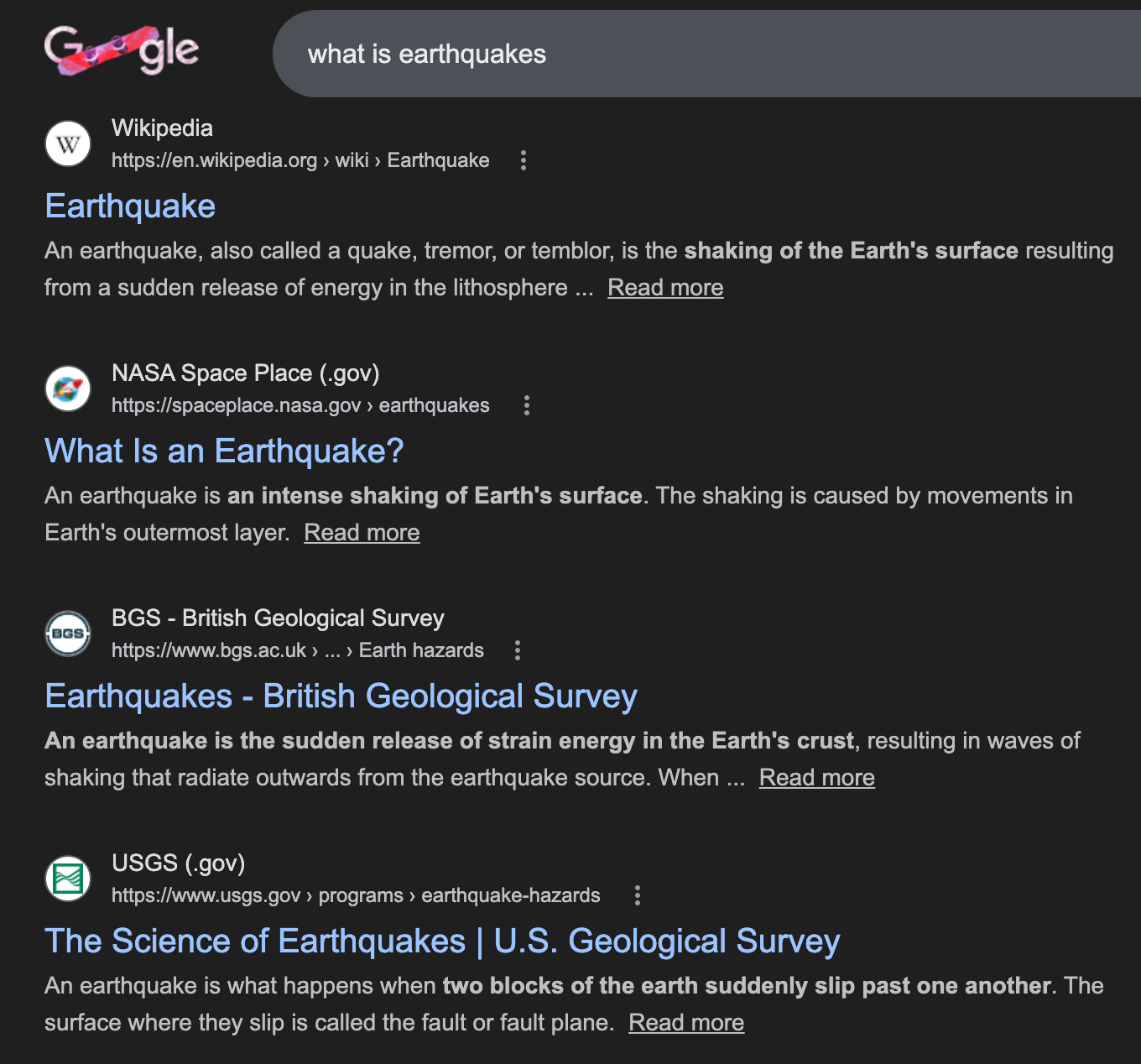
Examples of direct and indirect results:
You should find potentially the same result from different sources. Try to ask: "Does this feel like a fact-book or someone's thought?"
Parents note:
When exploring the social websites (e.g., reddit and Youtube), try to re-focus children's attention back the the topic ietself (not deviate from other links).
Q2. Ad-Detective: "How to play chess?"
The Goal: Identifying commercial manipulation and hidden motives. Try to ask: "Why do you think the website make the information for free?"
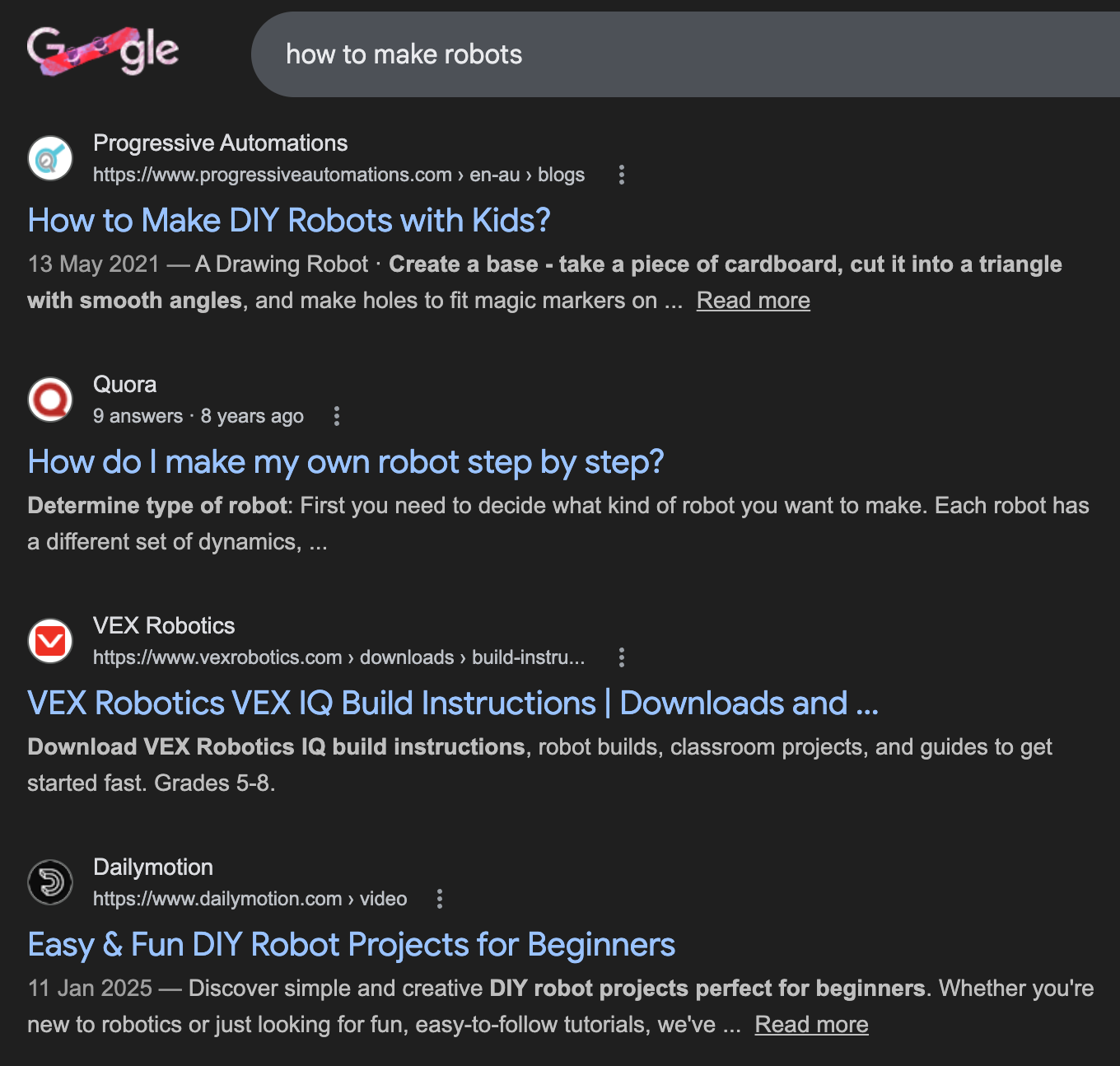
Examples of commerical, non-commercial and mixtured sites:
Try to ask: "Is the website or person telling us their opinion or a fact?"
Try to discuss and find the invisible seller: "Why do you think the website or video makes the information for free?"
Parents note:
Sometimes, due to competition, commercial websites actually provide quality content, don't overemphase about those commercial purpose. It is good enough as long as children know there maybe another reason for those free content.
Reward
Once they find the answer in two different "types" of sources, they earn a "Verified Detective" sticker from the free AI Polymath app.

Bonus: Clumsy AI Intern
The Goal: Validating AI output and maintaining "Human-First" authority.
- Setup: Open any AI chatbot.
- The Mission: Hire the AI as a "Junior Assistant" to write a report on a hobby (e.g., "The History of LEGO" or "How Minecraft was made").
- The Play:
- Generate: Ask the AI for 5 facts.
- The Sabotage: Tell your child: "This intern is brand new and very clumsy. He might have made a mistake. Let's find it."
- The Audit: Use the 3-2-1 Rule.
- Find 3 different sources to confirm the facts.
- Check if the info is less than 2 years old (or no date noted).
- Find 1 human expert name associated with the info.
- The Fix: If the AI missed something (like the most recent game update), have your child "edit" the AI's work.
- The Lesson: The AI did the "labor," but the child provided the "judgment."


